
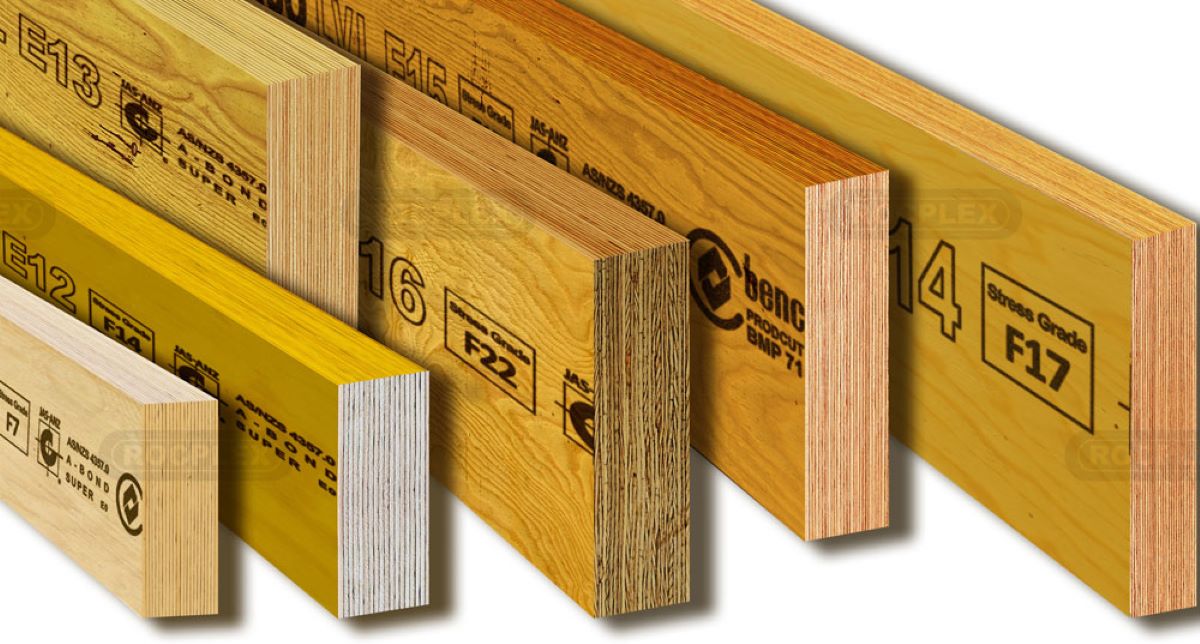
It is especially useful on projects where speed matters but tolerance and safety cannot slip, such as multi-storey frames, retaining walls, lift cores, and repetitive slabs.
What is LVL timber formwork, and how is it different from standard timber?
LVL timber formwork uses LVL (laminated veneer lumber), an engineered timber made by bonding thin veneers into a single, stable section. Unlike standard sawn timber, LVL timber formwork is designed to be uniform, straight, and strong in the same direction every time.
That consistency is the point. Standard timber can vary by piece due to knots, grain, moisture, and warp, while LVL timber formwork is manufactured to deliver predictable structural performance.
How does LVL improve strength in formwork applications?
It improves strength by delivering higher, more reliable bending capacity and stiffness than typical softwood of similar size. That helps resist wet concrete pressure, vibration, and handling loads without unexpected deflection.
Because the section is engineered, crews can trust the member’s performance across repeated pours. This reduces the risk of overloading weak pieces that might look fine but behave differently under pressure.
Why does LVL formwork create straighter, more accurate concrete?
It stays straighter because LVL is less prone to twisting, cupping, or bowing as site conditions change. When members remain aligned, sheeting sits flatter and edges line up more cleanly.
The result is better dimensional control. That can mean fewer blowouts, fewer patches, and less corrective grinding or filling after stripping, especially along long wall runs and slab edges.
How does LVL reduce deflection and improve concrete finish quality?
They reduce deflection by combining stiffness with uniformity, which keeps faces from “pillowing” under hydrostatic pressure. A flatter form face tends to produce a flatter concrete surface.
Less movement also reduces the chance of joint shadowing, lipping at panel joints, and irregularities that show up once light hits the finished wall or soffit.
How does LVL improve efficiency and speed on repetitive pours?
They speed up cycles because LVL is consistent to cut, set out, and re-use. Once a crew knows how a beam or bearer performs, they can repeat layouts with fewer adjustments.
That predictability saves time in small ways that add up: fewer shims, fewer replacements mid-pour, and less rework to correct alignment and levels before the concrete lorry arrives.
How does LVL help with planning and load design on site?
They simplify planning because their published properties are reliable and consistent between pieces. Engineers and supervisors can specify spans and spacing with more confidence than they often can with variable-grade sawn timber.
This can support leaner designs where appropriate, because teams are less likely to “over-timber” purely to hedge against unknown defects and variability. Click here to learn more about reobars versus traditional reinforcement and what the differences are.
How does LVL affect labour productivity during assembly and stripping?
They support productivity because straight members are faster to handle, quicker to prop, and easier to line up. Crews spend less time fighting warped timber and more time building accurate forms.
During stripping, stable members are less likely to bind or snag due to twist. That can reduce damage, improve re-use rates, and keep the next cycle moving.
Does LVL improve safety in temporary works?
They can improve safety by reducing unexpected movement, excessive deflection, and member failure caused by hidden defects. Stable formwork is easier to brace correctly and less likely to shift during vibration.
That said, safety still depends on correct design, installation, inspection, and pour rate control. LVL helps by being more predictable, not by replacing proper temporary works practice. Check out more about Temporary Works: Risk and Awareness.
How does LVL perform in wet site conditions and changing weather?
They tend to perform better than many standard timbers because engineered veneers and adhesives reduce the tendency to distort with moisture changes. This helps members keep their shape through rain, sun, and repeated wetting and drying.
However, they still need sensible storage and protection. If teams leave members soaking in water or exposed unnecessarily, performance and re-use life can still drop.
How can LVL reduce waste and improve re-use rates?
They reduce waste because fewer pieces are rejected for warp, splits, or knots. With better straightness and durability, more members remain suitable for the next pour rather than being cut down or thrown out.
Re-use improves cost control. When teams can plan for more cycles from the same stock, they reduce urgent purchases and avoid the common site issue of “making do” with damaged timber.
What should teams watch for when choosing LVL timber formwork?
They should match LVL grade and dimensions to the formwork design and supplier guidance. Not all LVL is identical, so the right product matters for spans, loads, and re-use expectations.
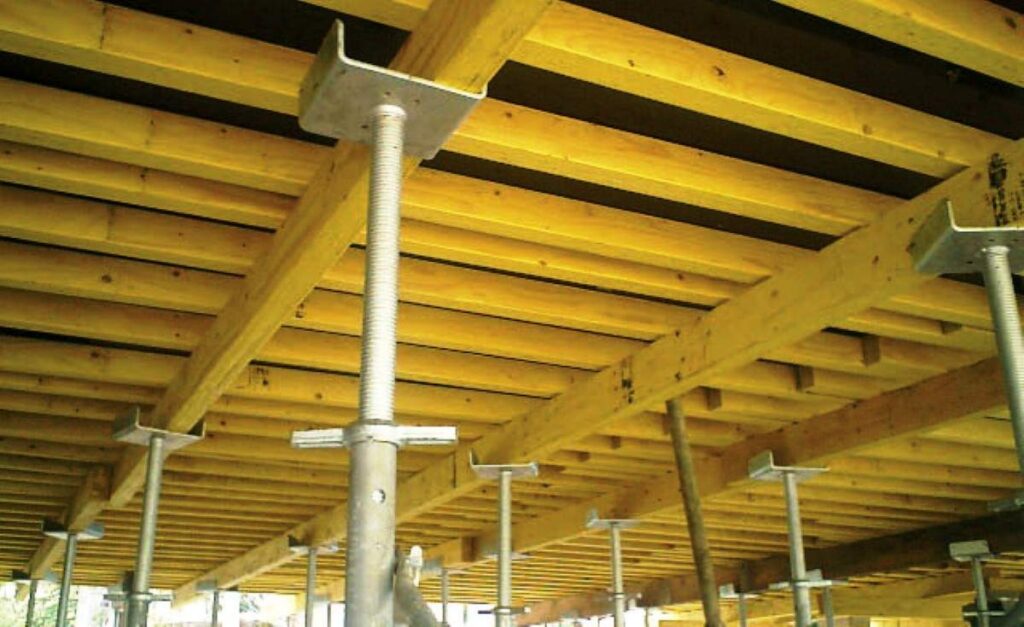
They should also confirm compatibility with their system, including connection details, fasteners, and bearing requirements. Good performance comes from the full assembly, not only the timber member.
What is the practical takeaway for strength and efficiency?
LVL timber formwork improves strength by being stiff, uniform, and dependable under wet concrete loads. They improve efficiency by staying straight, assembling faster, and delivering repeatable results across multiple pours.
For teams chasing faster cycles without sacrificing finish and safety, LVL is often a straightforward upgrade that pays back through fewer defects, less rework, and more predictable site progress.
FAQs (Frequently Asked Questions)
What is LVL timber formwork and how does it differ from standard timber?
LVL (laminated veneer lumber) timber formwork is engineered by bonding thin veneers into a single, stable section, designed to be uniform, straight, and strong consistently. Unlike standard sawn timber, which can vary due to knots, grain, moisture, and warp, LVL offers predictable structural performance ideal for reliable formwork.
How does LVL timber formwork enhance strength and durability during concrete pours?
LVL timber formwork delivers higher and more reliable bending capacity and stiffness compared to typical softwood of similar size. This strength helps resist wet concrete pressure, vibration, and handling loads without unexpected deflection, ensuring safer and sturdier temporary structures on site.
Why does LVL formwork result in straighter and more accurate concrete finishes?
Because LVL is less prone to twisting, cupping or bowing under changing site conditions, it maintains better alignment. This stability allows sheeting to sit flatter with cleaner edges, leading to improved dimensional control, fewer blowouts, patches or corrective grinding after stripping.
In what ways does LVL timber formwork improve efficiency on repetitive pours?
LVL’s consistent behaviour makes it easier to cut, set out and reuse. Crews can repeat layouts with fewer adjustments such as shims or replacements mid-pour. This predictability reduces rework and speeds up cycles, helping teams maintain faster progress without compromising quality.
How does using LVL timber formwork contribute to safety on construction sites?
LVL reduces risks associated with unexpected movement, excessive deflection and member failure caused by hidden defects. Its stable nature allows for easier bracing and less shifting during vibration. However, safety still relies on correct design, installation and inspection practices alongside the use of LVL.
What considerations should teams keep in mind when selecting LVL timber for formwork?
Teams should ensure the LVL grade and dimensions match the specific formwork design and supplier guidance since not all LVL products are identical. Compatibility with connection details, fasteners and bearing requirements is essential for optimal performance of the full assembly rather than just the timber member.